
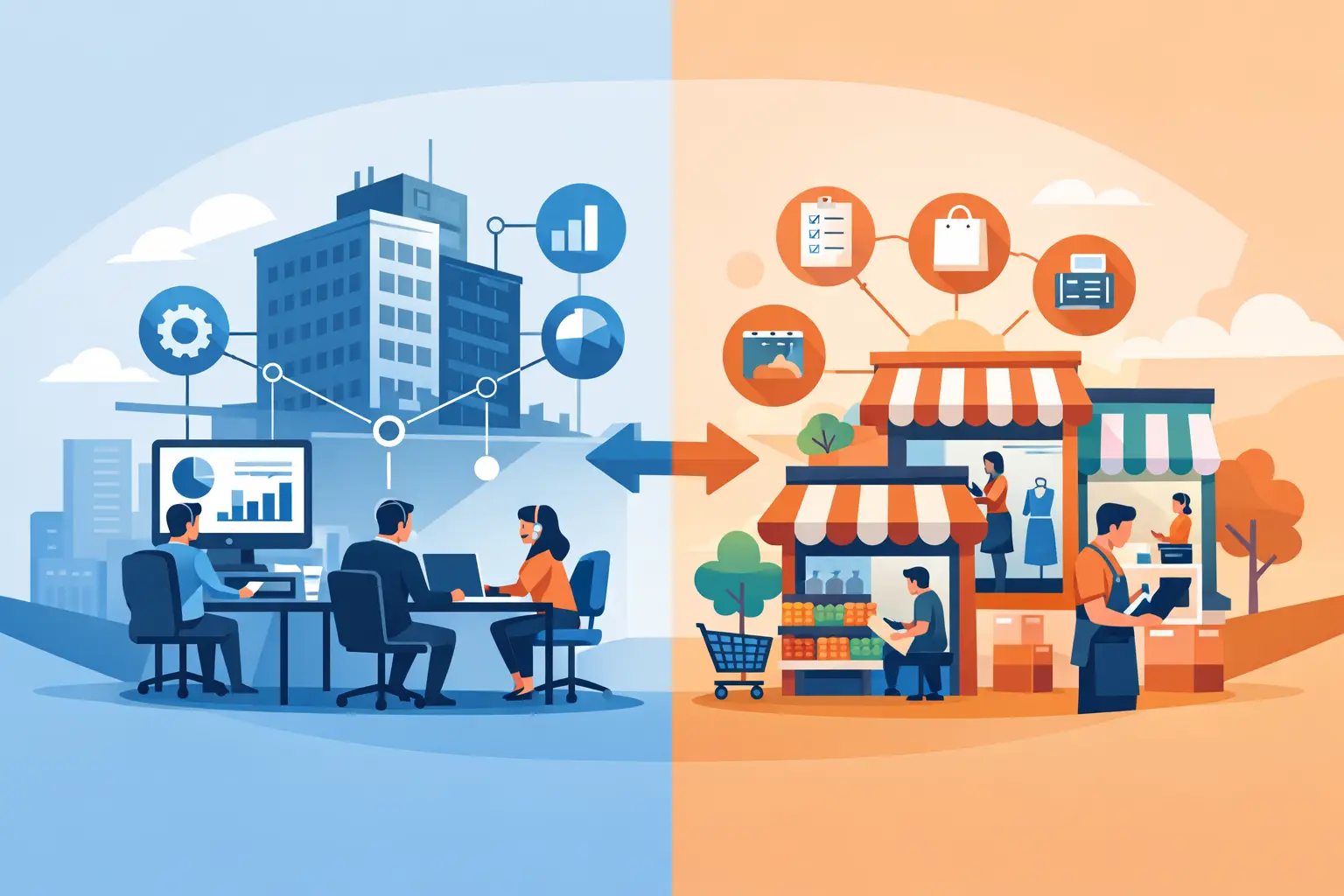
Centralized vs Store Level Operations Compared
A restaurant group can have a perfectly written recipe, a clear ordering process, and a weekly inventory routine - then still lose control when each location interprets those standards differently. That is the real tension in centralized vs store level operations: not headquarters versus the field, but consistency versus improvisation.
Restaurant operators need both. Central teams need a dependable view of costs, stock positions, procedures, and performance across locations. Store teams need enough authority to solve the problems in front of them: a late delivery, an unavailable ingredient, a sudden rush, or equipment that fails mid-shift. The operating model works when centralization defines the non-negotiables and store-level teams execute them with disciplined judgment.
See Restaurant Multi-Location Roles & Permissions: The Complete Guide for how this centralization question connects to per-location permissions and the district manager role.
What Centralized Operations Should Control
Centralized operations exist to create one source of truth. Without one, every location gradually builds its own version of the business. A chef uses a substitute that never reaches the recipe file. A manager keeps inventory in a spreadsheet that differs from the finance team's numbers. A supplier price changes, but menu costs stay frozen because no one updated the shared record.
The purpose of central control is not to make every decision from an office. It is to make sure the decisions that affect margin, brand consistency, and risk are documented once and followed everywhere.
For most restaurant groups, that means the central team owns the operating framework: standardized recipes, approved ingredient and supplier records, inventory categories, count procedures, core SOPs, and the reporting cadence. It also sets approval rules. If a location submits a count, a manager should be able to review the record, question an unusual number, and approve the final result. That trail matters when a food-cost issue needs investigation weeks later.
Centralization is especially valuable when supplier costs move. If the cost of chicken, cooking oil, or a key garnish changes, the current ingredient cost should update the recipes that use it. Leaders can then see which menu items have lost margin and decide whether to change a price, portion, supplier, or recipe. Leaving that process to individual stores creates delayed decisions and uneven margins.
The cost of over-centralizing
Central control becomes a problem when it turns routine operating judgment into a chain of approvals. A location should not need to wait for a corporate response before making a practical substitution that preserves service, documenting a delivery discrepancy, or addressing a low-stock item.
The risk is operational delay. Teams stop thinking because they assume every issue belongs to someone else. Managers spend more time chasing permission than running the shift. The result is not better control. It is a central office that receives more noise and a store team that takes less ownership.
What Store-Level Operations Should Control
Store-level operations are where standards meet the actual shift. Managers and kitchen leaders see the receiving problem, prep shortage, guest demand, and staffing reality before anyone at the group level does. Their value is not simply local knowledge. It is the ability to act quickly within a defined system.
A strong store team should own daily execution: completing counts, maintaining prep and storage discipline, submitting purchase information, following recipes, completing checklists, and escalating exceptions with enough context for a decision. They should also be accountable for explaining why a count changed, why an approved product was unavailable, or why a procedure could not be completed.
That accountability only works when the store team has clear standards to work from. Asking each location to "manage food cost" without a shared recipe, current ingredient pricing, or a repeatable count process is not empowerment. It is delegation without control.
The cost of too much local freedom
Local autonomy often feels efficient at first. An experienced manager can keep service moving, adapt orders, and solve problems without a long approval process. But when every store creates its own workaround, the group loses comparability.
One location may count by case, another by partial container, and a third only when someone remembers. One kitchen may follow the recipe exactly while another changes portions based on who is on the line. A procedure update may be shared in a group chat, but leadership has no clear view of which locations have responded.
These are not minor process differences. They create different food costs, inconsistent guest experiences, and records that cannot support reliable decisions. Store-level flexibility needs boundaries, or it becomes variation disguised as ownership.
Centralized vs Store Level Operations: Use a Decision Framework
The practical question is not whether a task belongs centrally or locally. Ask four questions instead.
First, does the decision affect the brand across multiple locations? If it does, central ownership is usually appropriate. Recipes, portion standards, approved products, and core SOPs should not vary casually by store.
Second, does the decision require immediate action based on conditions only the store can see? If yes, the store should have authority to act within a documented guardrail. For example, a manager can choose an approved backup product or adjust the prep plan, then record the exception for review.
Third, does the decision change a financial baseline? Ingredient costs, recipe costs, and purchasing standards need centralized visibility. A store can submit what it received and what it paid, while the shared system keeps the current cost record available to the people responsible for menu and margin decisions.
Fourth, can leadership audit what happened afterward? Good operating systems do not require leaders to be present for every decision. They provide evidence: submitted counts, manager approvals, completed checklists, procedure response rates by location, and records of changes made along the way.
Build the Model Around Guardrails, Not Guesswork
The strongest multi-unit operators centralize standards and decentralize execution. That phrase can sound simple, but it requires specific guardrails.
Start with recipes. Every location should work from the same approved build, portion, and batch yield. If a recipe produces 20 portions, its batch cost should be divided by those 20 portions to establish a consistent cost per serving. Stores can report a practical issue with the recipe, but they should not quietly rewrite it during service.
Then standardize inventory behavior. Counts should use consistent units, categories, and timing. Authorized staff can submit count records, and managers can approve them after review. That creates a count-based picture of stock and gives leaders a credible starting and ending inventory value, rather than a collection of disconnected estimates.
Next, turn low stock into a decision process. A dashboard low-stock list is useful because it puts attention on ingredients that may affect service or ordering. The store team can verify the count and decide what is needed; central purchasing or operations can use the same information to identify repeated shortages, supplier issues, or a flawed par level.
Finally, treat SOP communication as a rollout process. Posting a revised closing procedure is not the same as implementing it. Central teams should be able to see response rates by location, follow up where adoption is weak, and identify whether the procedure itself needs clarification. A rollout engine is more useful than a bulletin board.
The Right Model Changes as You Grow
A single-location restaurant may not need a separate corporate operations team. But it still benefits from centralizing its standards in one place. The owner, chef, and general manager should not be working from different files, memory, and messages. One restaurant can lose margin just as quickly as a group when recipe costs are stale or inventory counts are inconsistent.
As a business adds locations, the need for shared control rises sharply. What worked through verbal direction at one store fails across five. Leaders need role-based access built around who is actually responsible for what — see how to structure permissions across locations — plus consistent records and a way to see which locations are following the operating cadence without calling every manager for an update.
Dinezy supports that model by giving teams a shared operating system for count-based inventory, current recipe costing, procedures, and store-level accountability. The point is not to remove local leadership. It is to give local leaders a clearer system to run.
The best test is straightforward: can each store handle the shift in front of it, while leadership can still trust the numbers, the recipes, and the procedures across the group? If the answer is no, the issue is rarely effort. It is usually the operating design. Build the standards centrally, make execution visible locally, and let accountability carry the system on the days you are not in the store.
Frequently Asked Questions
What is the difference between centralized and store-level restaurant operations? Centralized operations set the standards that should not vary by location — approved recipes, ingredient and supplier records, count procedures, and core SOPs. Store-level operations are where those standards meet an actual shift: completing counts, following recipes, handling a receiving problem, and escalating exceptions with enough context for someone to act on. Neither layer works well without the other; centralization without local judgment turns into a bottleneck, and local judgment without shared standards turns into inconsistent food cost and guest experience from store to store.
Does centralizing operations mean taking authority away from store managers? Centralizing the standard doesn't have to mean centralizing every decision. The goal is to fix what shouldn't vary — recipes, ingredient costs, approved products — so store managers can spend their judgment on what only they can see in the moment, like a late delivery or an approved backup product. A manager can act on a documented guardrail and record the exception for review, rather than waiting on a response from someone off-site.
Do single-location restaurants need centralized operations too? Yes — a single restaurant benefits from centralizing its own standards even without a corporate layer above it. The owner, chef, and general manager working from the same current recipe, the same ingredient costs, and the same count process is what centralization actually means at one location. A single restaurant can lose margin just as fast as a multi-unit group when recipe costs go stale or counts stop being consistent.
How can leadership see what's happening across locations without visiting every store? Dinezy gives every store its own inventory, recipe, and reporting view, and leadership reviews each location individually by switching between the stores they have access to rather than working from a single blended number. The one exception is Bulletin Board: a single post can target an audience across multiple stores at once, with response rates tracked per location — useful for confirming a procedure update actually reached the floor everywhere, not just wherever someone happened to read the message.
Key Takeaways
- Centralize what shouldn't vary by location — recipes, ingredient records, approved products, core SOPs — and decentralize the judgment calls that depend on what only the store can see.
- Use four questions to sort a decision: does it affect the brand across locations, does it need immediate on-site judgment, does it change a financial baseline, and can leadership audit it afterward?
- Store-level flexibility needs guardrails; without them, "ownership" turns into undocumented variation that shows up as inconsistent food cost.
- Even a single-location restaurant benefits from centralizing its own standards — the same recipe, current ingredient costs, and count process should be shared across whoever runs the kitchen.
- As a group grows, the need for role-based access and per-location visibility rises sharply — verbal direction stops scaling past one store.
Dinezy gives every store its own current recipes, ingredient costs, and count-based inventory records, with role-based access built around who is actually responsible for what — so the standards you set centrally are the same ones your teams are executing on the floor. Try Dinezy free at dinezytech.com.