
Restaurant Pre-Shift Meeting: What to Cover
It's 4:45 and the doors open at 5. The manager pulls the servers together by the host stand: the halibut is 86'd, there's a party of twelve at 7:30 with a shellfish allergy, and the patio heaters are out. Three minutes, everyone nods, service starts. At 6:15 a server who came in late tells table 9 the halibut is "really good tonight."
A restaurant pre-shift meeting is one of the oldest habits in the industry, and one of the best. It's also built on an assumption that rarely holds: that everyone who needs the information is standing there when it's said.
TL;DR
- A restaurant pre-shift meeting is a short gathering, usually 5 to 10 minutes, where the manager on duty covers what the team needs to know for the shift ahead.
- The best ones cover a few things that change today: 86'd items, specials, reservations and large parties, guest notes, and one service focus.
- Pre-shift meetings miss people. Staggered start times, late arrivals, and split shifts mean some of the team never hears it.
- Keep the meeting short and specific, and put the same information somewhere everyone can see it after the meeting ends.
- Dinezy's Bulletin Board gives the whole team the same post, whenever their shift starts, and shows who has confirmed it.
What Is a Restaurant Pre-Shift Meeting?
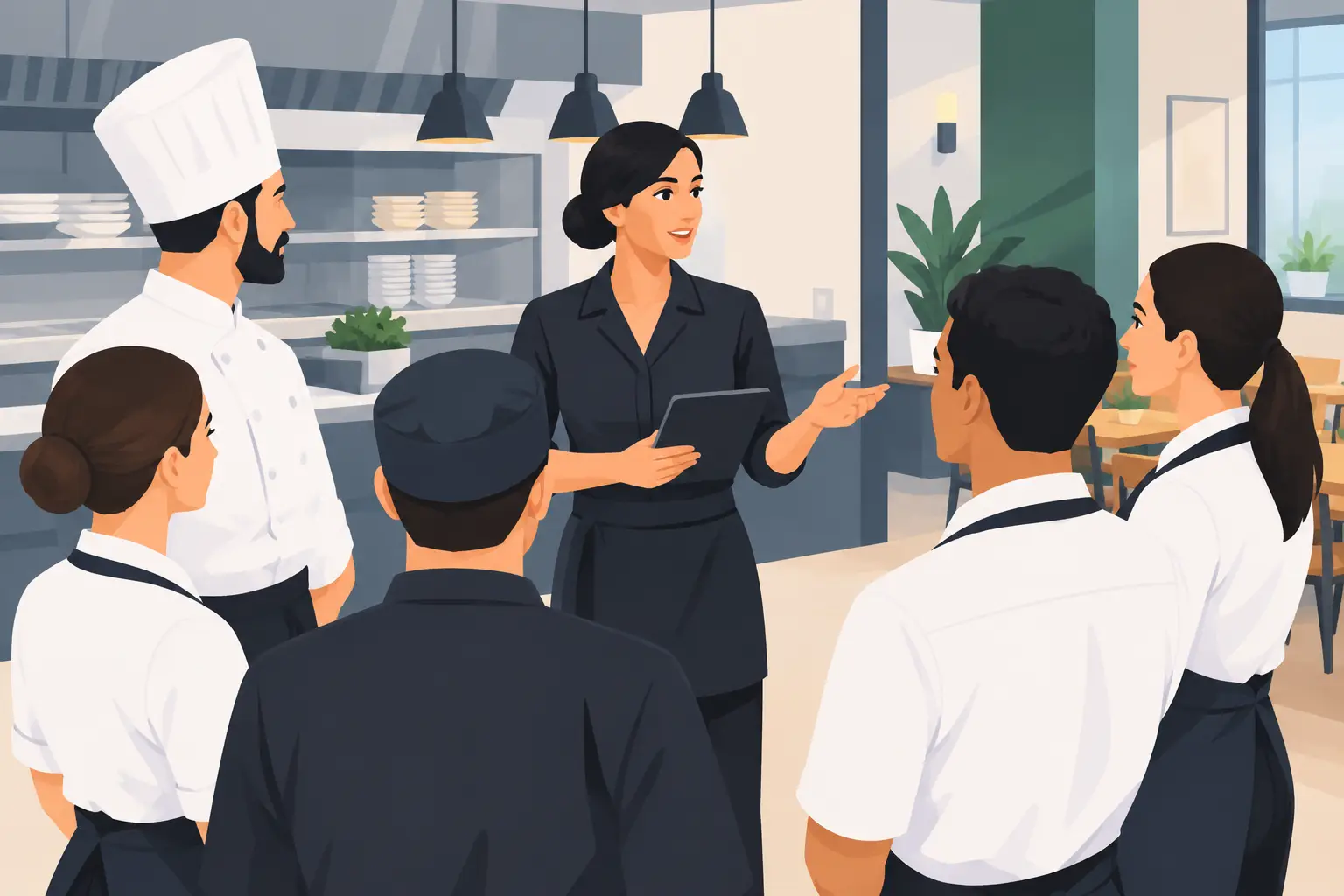
A pre-shift meeting, sometimes called a lineup or a huddle, is a short team meeting right before service. The manager or chef on duty covers what's different about today: what's off the menu, what's being featured, who's coming in, and what the team should focus on. It usually happens standing up, at the pass or the host stand, and it shouldn't run longer than ten minutes.
It does two jobs. The obvious one is information: everyone walks onto the floor knowing the same things. The less obvious one is focus. Five minutes together before the doors open shifts a team from setting up to serving, and it's often the only time in the day the manager talks to everyone at once.
Why Pre-Shift Meetings Still Miss People
The meeting works for whoever is in it. That's the problem.
Start times are staggered. A lunch server leaves at 3, the bartender starts at 4, the second wave of servers comes in at 5:30. A meeting at 4:45 reaches one slice of the team.
People run late. The busboy who got stuck in traffic, the cook who was finishing prep in the walk-in. They missed the three minutes that mattered most.
The kitchen and the floor hear different meetings. Front of house gets the lineup at the host stand; the line gets a quick word from the chef at the pass. Neither group always hears what the other was told.
Information changes during the shift. The kitchen runs out of short rib at 7:10. The meeting is long over, and now the update travels by whoever happens to walk past the pass.
None of this means the meeting is a bad idea. It means the meeting can't be the only place the information lives.
What to Cover in a Pre-Shift Meeting
A good pre-shift meeting is short because it only covers what's different today. Here's a pre-shift meeting agenda that works for most full-service and fast-casual restaurants.
Pre-shift meeting template
- 86'd and low items. What's off the menu, what's running low, and what to offer instead.
- Specials and features. What they are, how they taste, the price, and one line servers can use at the table.
- Reservations and large parties. Times, table assignments, and anything the guests have asked for.
- Guest notes. Regulars, special occasions, and any allergies the kitchen already knows about.
- Equipment and facility issues. What's broken, what to avoid, and who to tell if it gets worse.
- One service focus. A single thing to get right tonight: table touches, check-back timing, upselling a dessert.
- Questions. Thirty seconds for anyone who needs to ask something before the doors open.
Seven items, five to ten minutes. If the list keeps growing, some of it belongs somewhere else: a policy change belongs in an announcement, and training belongs in a training session.
Pre-shift meeting topics and ideas
The service focus is where a pre-shift meeting can do more than pass along information. A few ideas that keep it from turning into the same speech every night:
- Taste the special. Five spoons, ten seconds. A server who has tasted the dish describes it better than one who has only heard about it.
- One table story. A quick example from last night of a guest moment that went well, or one that didn't.
- Menu quiz. Ask two people what's in a dish, or which items contain nuts.
- Shout-outs. Call out someone by name for something specific they did well.
- Numbers that matter to the team. If you're running a dessert push this week, say where the team stands.
Keep It Short and Specific
The pre-shift meetings people stop listening to share a pattern: they run long, they repeat yesterday, and they mix the urgent with the routine.
- Lead with what changed. Start with 86'd items and reservations. People listen hardest in the first minute.
- Say it once, clearly. "The halibut is out; offer the salmon" beats a paragraph about the delivery.
- Same time, same place. A lineup that happens at 4:45 at the host stand every day becomes a habit. One that happens "when we get a minute" doesn't.
- Don't use it for policy. A new uniform rule or a change to how sections are assigned deserves more than a passing mention before service, and it needs to reach people who weren't there.
Make Sure Every Shift Starts With the Same Information
The meeting reaches the people in the room. Everyone else needs the same information in a place they'll actually see it: not a text buried in the group chat, and not a sticky note on the schedule board that falls off by Friday.
The fix is simple to describe: write down the few things that matter today, in one place the whole team checks, and know who has confirmed them. A late server should be able to find out the halibut is 86'd before they reach table 9, not after.
That's where most restaurants fall back on the group chat, and where the hidden risk of restaurant group chats shows up: the update is there, but so are forty other messages, and nobody can tell who read it.
Where Dinezy Fits
Dinezy's Bulletin Board is built for the information that has to reach the whole team, not just whoever was standing at the host stand:
- One post, the whole team. Post today's 86 list, the large party, or the broken heater as an Announcement, and everyone who works that day sees the same post on their phone, whenever their shift starts.
- The right people. Send it to one store, to the kitchen or the floor, or to the whole brand, so the information reaches the people it's for.
- Urgent stays on top. Mark a post Urgent and pin it, so the halibut update isn't sitting under last week's reminders.
- Know who has it. Each Announcement has a Confirm Read button. You see who has confirmed and who hasn't, so you know who to catch before they take their first table. Opening a post doesn't count as confirming it.
The pre-shift meeting stays. The Bulletin Board makes sure the people who missed it start with the same information. For more on getting announcements read, see how to get restaurant staff to read announcements, and for ready-to-use wording, see restaurant staff announcement examples.
Frequently Asked Questions
What should be covered in a restaurant pre-shift meeting? Cover what's different about today: 86'd and low items, specials and features, reservations and large parties, guest notes such as allergies or special occasions, equipment issues, and one service focus for the shift. Leave a moment for questions, and keep it to five to ten minutes.
How long should a pre-shift meeting be? Five to ten minutes is enough for most restaurants. If it regularly runs longer, it's carrying things that belong elsewhere, like policy changes or training, which deserve their own time and need to reach people who weren't there.
Who should run the pre-shift meeting? The manager on duty usually runs it for the floor, and the chef or kitchen manager covers the kitchen's part, ideally together so both sides hear the same thing. Rotating a short section, like the service focus, to a different server or cook each day keeps the team engaged.
How do you share pre-shift information with staff who missed the meeting? Put the same few points in one place the whole team checks, and see who has confirmed it. With Dinezy's Bulletin Board, you post it once as an Announcement, and everyone who comes in later sees the same post and can tap Confirm Read.
What are good pre-shift meeting ideas? Taste the special together, share one guest story from the night before, quiz two people on menu ingredients, give a specific shout-out, and share one number the team is working toward this week. Rotate them so the meeting doesn't become the same speech every night.
Key Takeaways
- A restaurant pre-shift meeting is a 5 to 10 minute lineup covering what's different about today, plus one service focus.
- The meeting only reaches the people in the room; staggered start times, late arrivals, and mid-shift changes leave gaps.
- Lead with what changed, say it once, and keep policy changes and training out of the lineup.
- Put the same information where everyone can see it after the meeting, and know who has confirmed it.
Make sure every shift starts with the same information. Dinezy's Bulletin Board puts today's updates on everyone's phone, keeps the urgent ones on top, and shows who has confirmed them. Try Dinezy free at dinezytech.com